Do Whitening Strips Damage Teeth? A Dentist's Honest Answer
Posted on 12/7/2025 by Singing River Dentistry - Florence |
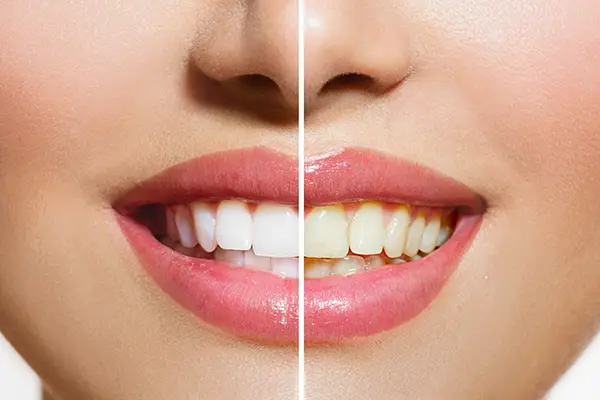 If you’ve ever stood in the toothpaste aisle wondering whether whitening strips actually damage your teeth, the short answer is that most reputable whitening strips are generally considered safe when used as directed, but they aren’t risk-free, and how you use them matters a lot. At our Florence office, this is one of the most common questions we hear from patients before they reach for an over-the-counter kit, and we think a straight, balanced answer beats either fear-mongering or a thumbs-up that ignores the real risks. If you’ve ever stood in the toothpaste aisle wondering whether whitening strips actually damage your teeth, the short answer is that most reputable whitening strips are generally considered safe when used as directed, but they aren’t risk-free, and how you use them matters a lot. At our Florence office, this is one of the most common questions we hear from patients before they reach for an over-the-counter kit, and we think a straight, balanced answer beats either fear-mongering or a thumbs-up that ignores the real risks.
Below, we’ll walk through what the actual risks of whitening strips are, who should be more cautious before using them, how they compare to professional teeth whitening options, and what to do if you develop sensitivity along the way. The goal isn’t to talk you out of strips. It’s to help you make a smart, informed choice about how you brighten your smile.
On This Page
Are Whitening Strips Safe?
Most major-brand whitening strips sold in the U.S. use either hydrogen peroxide or carbamide peroxide as the active ingredient, the same peroxide-based chemistry used in professional whitening. The concentration in over-the-counter strips is lower than what your dentist uses in the office, which is a deliberate tradeoff: less powerful, but also lower risk of acute damage when the product is used correctly.
That said, “safe when used as directed” is doing a lot of work in that sentence. The most common problems we see at the dental chair aren’t from the product itself but from how it’s been used, whether that’s leaving strips on longer than recommended, running back-to-back courses without breaks, or applying strips to teeth that already have an unaddressed problem like decay or gum disease. In those situations, the strip itself usually isn’t the issue. The misuse is.
Whitening Strips vs. Professional Whitening
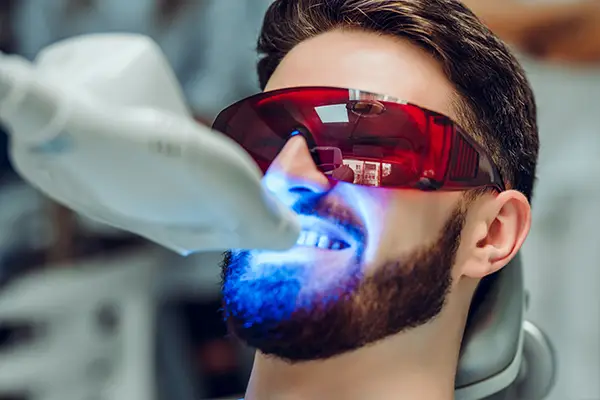 The honest comparison goes like this: whitening strips are convenient, accessible, and inexpensive. Professional whitening, whether done in the office or with custom-fitted at-home trays from the dentist, gives you stronger results, faster, with better control over which teeth get treated and how evenly. The honest comparison goes like this: whitening strips are convenient, accessible, and inexpensive. Professional whitening, whether done in the office or with custom-fitted at-home trays from the dentist, gives you stronger results, faster, with better control over which teeth get treated and how evenly.
In-office whitening uses much higher peroxide concentrations under controlled conditions, with a protective barrier placed over the gums and isolation of the teeth so the gel goes only where it’s meant to. Results are typically dramatic and visible the same day. Custom-fitted at-home whitening trays from a dentist sit in the middle: less aggressive than in-office whitening, but generally more effective than strips because the custom tray holds the gel against the teeth longer and keeps it off the gums, which is where most of the irritation from strips comes from.
Where strips struggle is in cases where staining isn’t even across the smile, where existing dental work like crowns or veneers won’t lighten and creates a patchwork effect, or where the patient wants a more significant color change than strips can realistically deliver. For those situations, a brief cosmetic dentistry consultation in Florence usually saves people time and money compared to cycling through multiple over-the-counter products that won’t get them where they want to go.
Common Side Effects to Watch For
The four issues we see most often with whitening strips are temporary tooth sensitivity, gum irritation, uneven results, and (with overuse) potential effects on the enamel surface. None of these are catastrophic for most healthy mouths, but they’re worth knowing before you start.
Temporary tooth sensitivity is by far the most common, especially to cold drinks and air. It usually shows up within the first few applications and fades within a few days of stopping the treatment. Gum irritation happens when the peroxide gel contacts soft tissue, since strips are one-size-fits-all and don’t conform perfectly to every smile. You might notice a tingling sensation or a temporarily whitened patch along the gumline that resolves on its own.
Uneven results are subtler but common. Strips lighten what they touch and skip what they don’t, so curved teeth or those that sit slightly behind others may not lighten as much as the front teeth. There’s also a more cumulative concern to watch for: using strips far more often than the package recommends, or piling course on course over many months, can affect the surface integrity of the enamel over time. That isn’t a one-and-done risk. It builds slowly, which is why following the package directions matters more than people assume.
Who Should Be More Cautious With Whitening Strips
Whitening strips aren’t the right choice for every mouth, even when used carefully. The following situations call for a quick conversation with the dentist before you start a course:
| • |
Existing tooth sensitivity – Strips can intensify sensitivity that’s already present. A desensitizing toothpaste for a few weeks beforehand, or skipping strips entirely in favor of a dentist-supervised approach, often works better.
|
| • |
Untreated cavities or gum disease – Peroxide on a tooth with active decay can cause significant discomfort and may worsen the underlying problem. These issues should be addressed first.
|
| • |
Dental work on front teeth – Crowns, veneers, and white fillings don’t respond to whitening agents. If you have visible restorations, strips can leave your natural teeth lighter than the dental work, creating a mismatch.
|
| • |
Pregnant or nursing patients – There isn’t enough research on peroxide whitening during pregnancy or breastfeeding to call it clearly safe, so most professional guidance recommends waiting.
|
| • |
Teens with developing teeth – Younger enamel is more porous and more prone to sensitivity. We generally recommend waiting until the mouth is fully developed and consulting a dentist before starting whitening.
|
| • |
Anyone planning a larger cosmetic plan – If a smile makeover is on the horizon, whitening should be sequenced as part of the plan rather than done independently first. |
None of these are blanket prohibitions. They’re reasons to get a quick professional opinion before starting, which is a much shorter conversation than fixing a problem after the fact.
What to Do If You Develop Sensitivity
If your teeth or gums start hurting partway through a course of strips, the first step is to stop. Don’t push through to finish the box thinking the discomfort will fade on its own while you keep going. Give your teeth a break for at least a week, switch to a desensitizing toothpaste (look for potassium nitrate or stannous fluoride on the label), and avoid extreme cold or hot drinks for a few days.
If sensitivity is mild and clearly fading, you can usually resume whitening at a slower pace once symptoms have settled, for example every other day instead of daily, or alternating with desensitizing treatments. If the sensitivity is sharp, doesn’t fade after a week, or is happening in just one specific tooth (which can indicate an unrelated problem like a cavity or small crack), that’s worth a dental exam before you whiten anything else.
For gum irritation specifically, rinse with cool water after removing the strip, and check whether you’re leaving the strip on longer than directed or letting it ride too high on the gumline. If irritation is happening every session, the strip likely isn’t fitting your smile well, and a custom whitening tray from the dentist would be a more comfortable option.
When to Talk to Your Dentist About Whitening
If you’re curious about whitening and want to know what your best option actually is, a brief conversation usually saves a lot of guesswork. The team at Singing River Dentistry in Florence, AL can look at your current shade, the condition of your enamel, and whether you have any dental work that affects how strips would perform. Call us at 256-764-9955 or visit our homepage to learn more about whitening options that fit your smile.
Frequently Asked Questions
How often can I safely use whitening strips?
Most major-brand strips are designed for a treatment course of one to two weeks, used once. Repeating that course every six months or so is generally considered reasonable for healthy teeth, but doing back-to-back rounds with no break is where wear and sensitivity tend to show up.
Can whitening strips damage tooth enamel?
With normal use as directed, the risk is low for most people. With overuse, such as daily applications over months, leaving strips on far longer than recommended, or repeated courses with no rest, the surface integrity of the enamel can be affected over time. Damage from a properly used short course is not what most research has found.
Will whitening strips work on dental crowns or veneers?
No. Whitening agents only lighten natural tooth structure, not porcelain or composite restorations. If you have visible crowns, veneers, or white fillings on front teeth, your natural teeth can end up lighter than the dental work, leaving an obvious mismatch. A consultation before whitening can help you avoid that result.
Do strips work better than whitening toothpaste?
Yes, for most people. Whitening toothpastes primarily remove surface stains through mild abrasion, while strips actually lighten the underlying tooth color through peroxide chemistry. Toothpastes are useful for maintaining a result, but they generally won’t produce the same shade change strips can.
Is sensitivity from strips permanent?
Almost never. Whitening-related sensitivity is typically temporary and resolves within a few days of stopping the treatment, especially with a desensitizing toothpaste. Sensitivity that lingers or only affects one specific tooth usually points to a separate issue worth getting evaluated through tooth sensitivity management.
|
|